Managed Kubernetes, end to end.
HA control planes, worker autoscaling, in-place upgrades, and integrated load balancers and volumes — hosted in Montréal, billed in CAD.
From an empty project to kubectl
The console as you will use it — pick a version and a size, watch the control plane and the workers come up, then connect with your own kubeconfig.
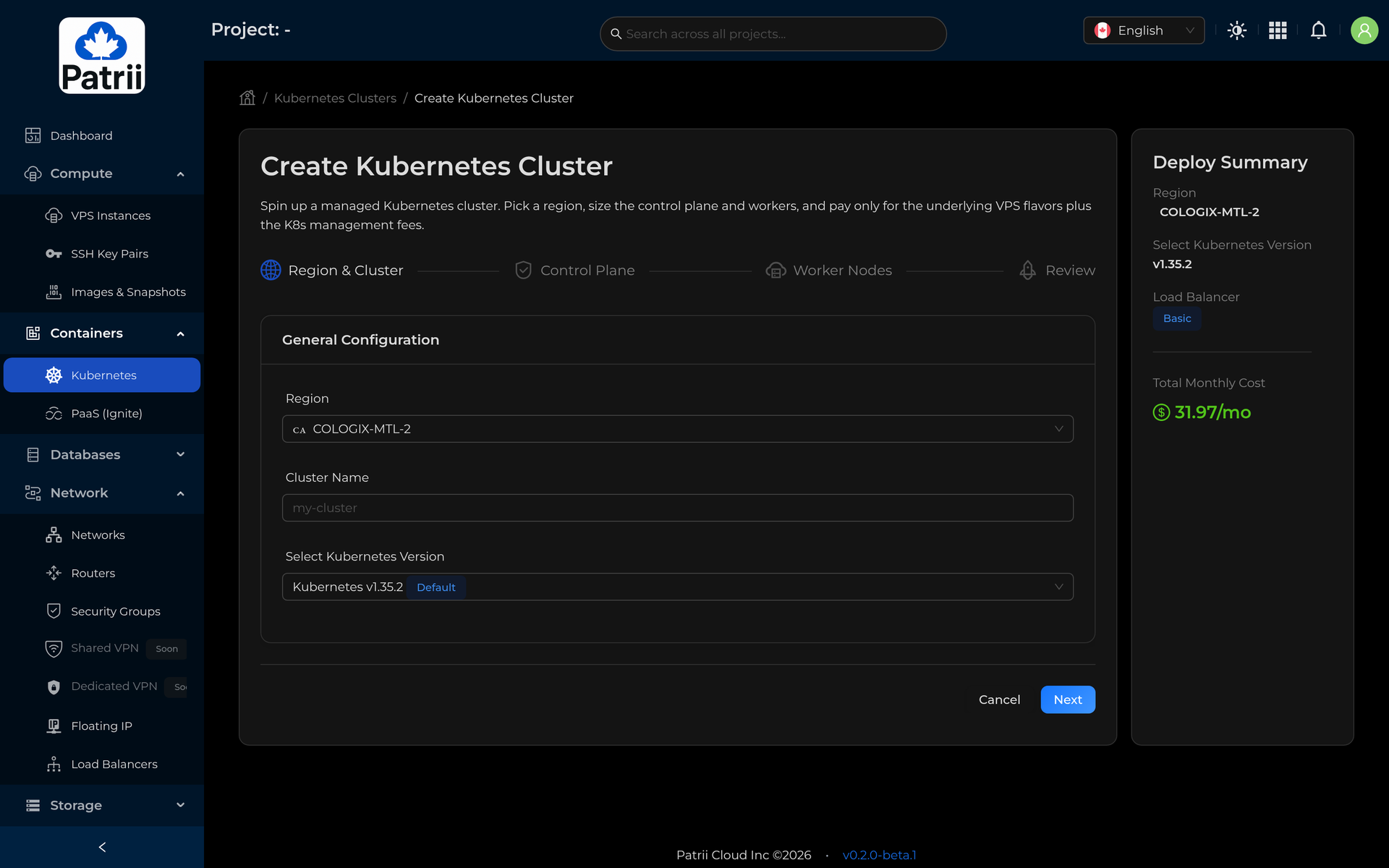
Creating a cluster, end to end — no cuts.
Why Patrii Kubernetes
Production-grade from the first cluster
One command away from production
You pick the version and the sizes. We stand up the HA control plane, the worker pool, the load balancer, the volumes and the public entry point — and keep them healthy.
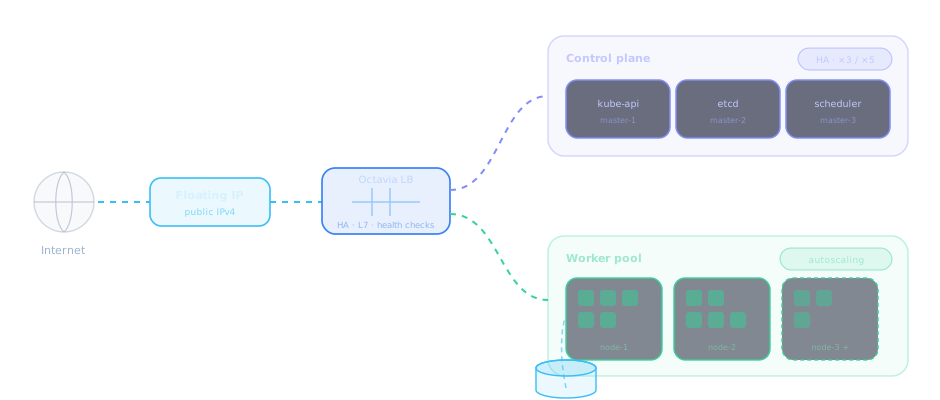
Pay for the cluster, size the nodes
A flat control-plane fee, a small per-node management fee, and workers billed as ordinary VPS.
Cluster (control plane)
HA control plane — run 1, 3 or 5 masters for high availability.
Node management
Managed lifecycle per worker — upgrades, autoscaling and health.
Worker nodes
Any VPS flavor · you choose CPU / RAM
Workers are ordinary Patrii VPS — pick the flavor that fits.
From zero to kubectl in minutes
Pick a version & sizes
Choose the Kubernetes version, the control-plane size (1/3/5) and a worker flavor and count.
We provision the cluster
HA control plane, worker pool, load balancer, floating IP and storage classes are stood up for you.
Download your kubeconfig
Get an RBAC-scoped kubeconfig for you or your team — namespace or cluster wide.
Deploy, scale, upgrade
Apply your manifests, autoscale node groups, and upgrade in place when a new release lands.
New Kubernetes versions, no maintenance window
Move the control plane and your workers to a newer Kubernetes release with a rolling, node-by-node upgrade — the pool is never fully down, and your workloads reschedule as each node comes back.
- Auto — we roll out patch releases on a cadence you choose.
- Frozen — you stay pinned and upgrade on your own schedule.
- Rollback-aware — control-plane snapshots before every jump.
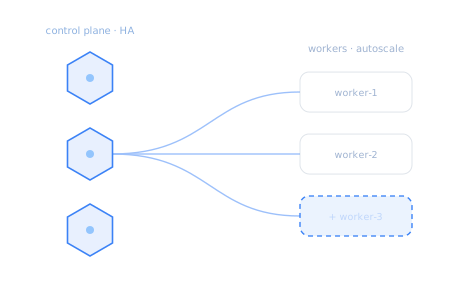
HA control planes that autoscale
Run 1, 3 or 5 control-plane nodes for high availability, and let the worker pool scale out automatically as demand grows — on dedicated nodes you size yourself.
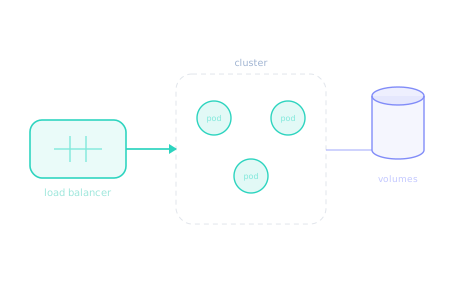
Load balancers & volumes, wired up for you
Every cluster comes with load balancers and persistent volumes provisioned automatically — Service and PersistentVolumeClaim just work, no glue code.
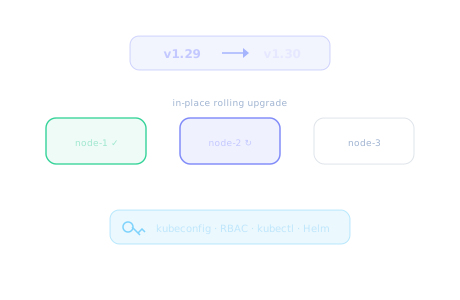
In-place upgrades, RBAC kubeconfigs
Roll Kubernetes and node versions in place, and hand out RBAC-scoped kubeconfigs — then connect with kubectl, Helm and the tooling you already use.
Bring your stack